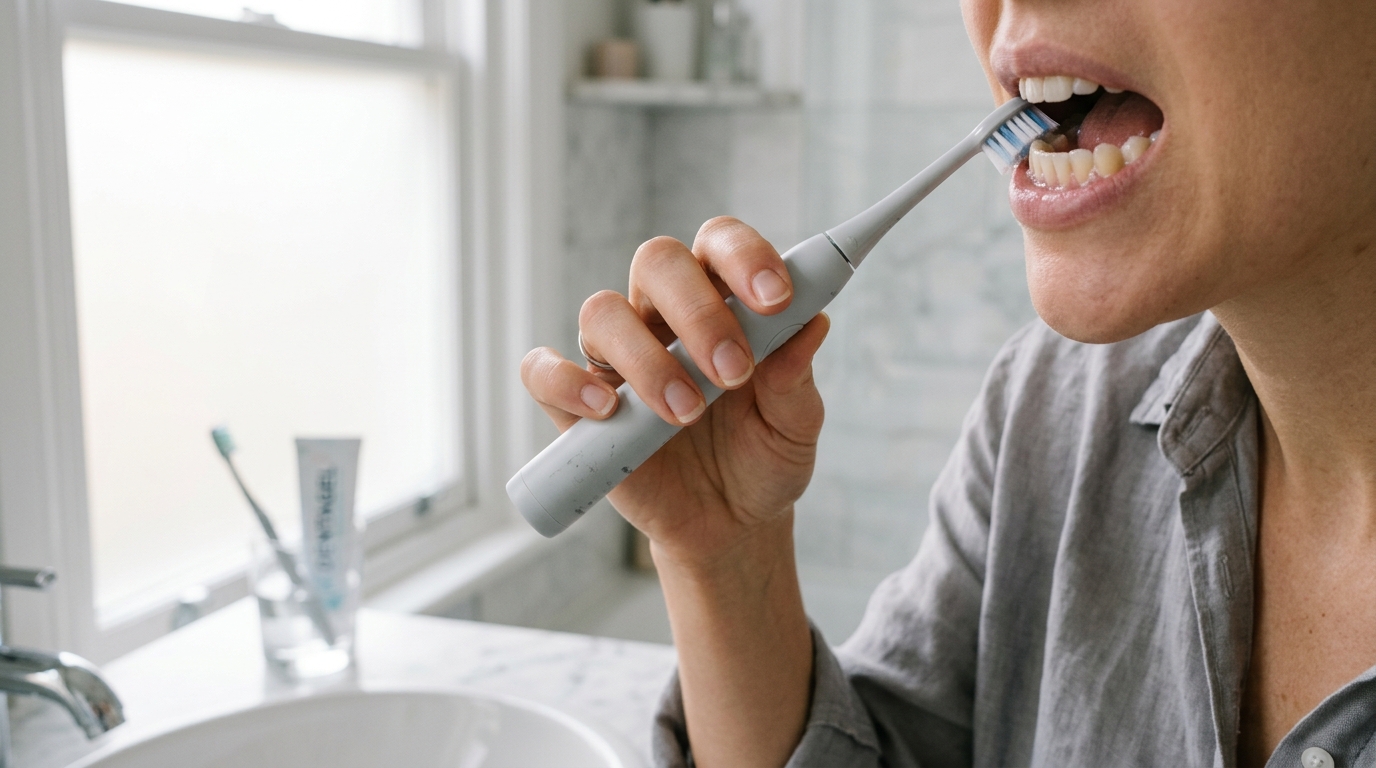
Common Brushing Mistakes
Aggressive brushing harms more than it helps. Excessive pressure and horizontal scrubbing damage gum tissue and cause gum recession over time. Teeth require gentle, thorough cleaning rather than forceful scrubbing.
Rushing through brushing misses critical areas. Most people brush for only 30-40 seconds when dentists recommend two full minutes for complete coverage.
The Correct Technique
Position your toothbrush at 45-degree angles where teeth meet gums. Use gentle circular motions rather than horizontal strokes. This angulation effectively removes plaque at the gum line where it causes the most damage.
Brush all surfaces: outer surfaces, inner surfaces facing the tongue, and chewing surfaces. Many people neglect inner surfaces and the backs of rear teeth, leaving plaque undisturbed.
Systematic Approach
Develop a consistent pattern to ensure you cover your entire mouth. Start at one quadrant and methodically progress through upper right, upper left, lower left, and lower right areas.
Spend at least 30 seconds per quadrant. Use a timer initially to establish proper timing habits. As habits develop, you'll naturally spend adequate time without external reminders.
Toothbrush Selection
Soft-bristled brushes effectively remove plaque without damaging gum tissue. Medium and hard bristles increase gum damage risk. Electric toothbrushes with gentle pulsating or oscillating motions facilitate proper technique, especially for those with manual dexterity limitations.
Replace your toothbrush every three months or immediately if bristles splay or fray. Worn bristles lose cleaning efficiency and risk gum trauma.
Supporting Habits
Angle the brush correctly. Use gentle pressure—press about as firmly as you'd press your eye closed. Combine brushing with daily flossing for comprehensive plaque control.