Teeth whitening is among the most requested cosmetic dental procedures. Understanding the science behind whitening helps you choose safe, effective methods.
How Whitening Works
Tooth color results from the outer enamel layer and the underlying dentin. Whitening agents contain hydrogen peroxide or carbamide peroxide, which penetrate enamel and break down staining molecules.
Whitening works best on extrinsic stains (surface staining from coffee, wine, tobacco). Intrinsic stains (internal discoloration from medications or trauma) respond less effectively.
Professional Whitening
Dental office whitening uses higher peroxide concentrations (15-35%) than over-the-counter products. Results are faster and more dramatic. A single session can lighten teeth by 6-8 shades. Results typically last 6-12 months.
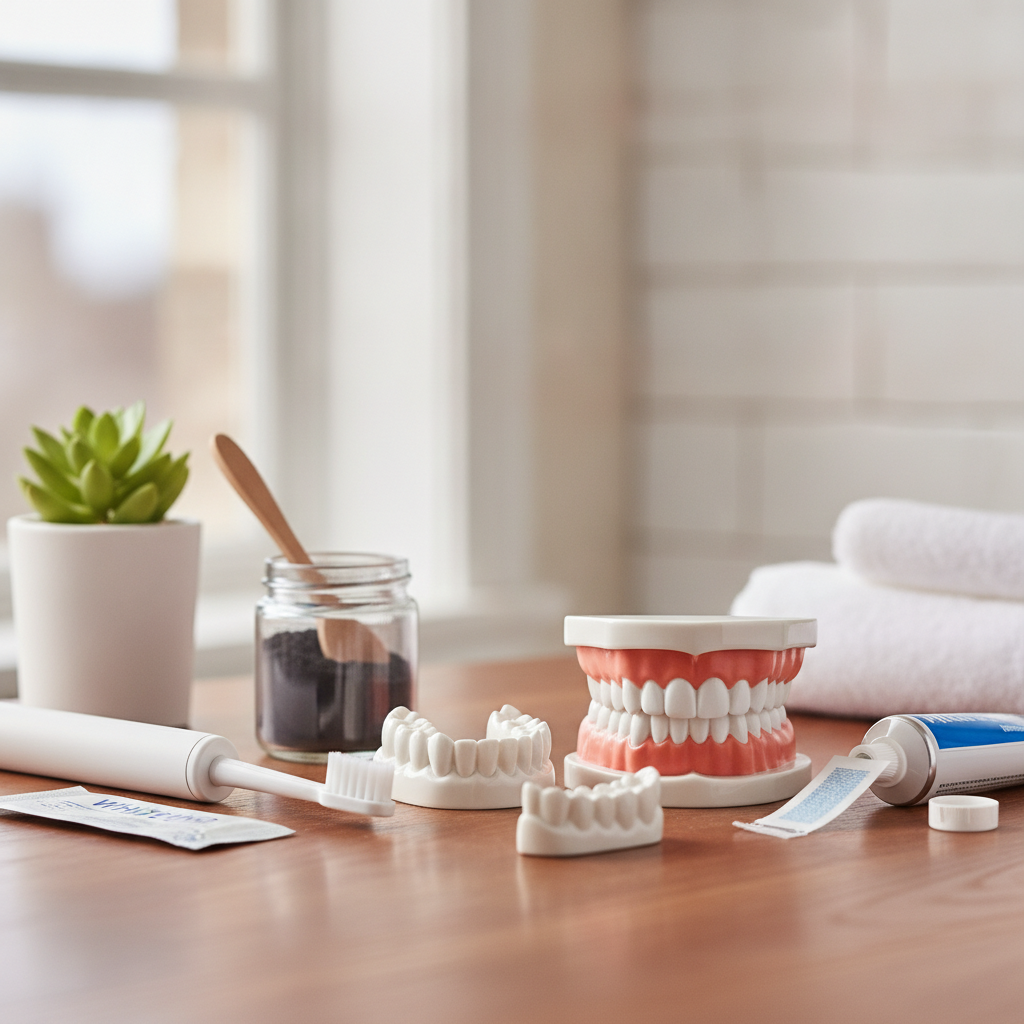
Professional trays custom-fitted to your teeth hold whitening gel more effectively than generic strips. Combined with lower peroxide concentrations than in-office treatments, professional custom trays provide excellent results with minimal sensitivity.
Over-the-Counter Options
Whitening strips, rinses, and toothpastes contain lower peroxide concentrations (3-10%). Results develop more slowly—typically 2-3 weeks—but are effective for mild to moderate staining.
Whitening toothpastes remove surface stains through abrasion rather than chemical whitening. They cannot lighten tooth color beyond its natural shade.
Sensitivity Management
Whitening can temporarily increase tooth sensitivity. Using a desensitizing toothpaste 1-2 weeks before whitening reduces sensitivity. Whitening products formulated with potassium nitrate cause less sensitivity than other formulations.
Increase intervals between whitening sessions if sensitivity occurs. Never use whitening products on damaged enamel or exposed root surfaces.
Longevity Tips
Results fade fastest in people who consume dark beverages regularly. Using a straw when drinking coffee or wine, rinsing mouth after meals, and maintaining good oral hygiene extend results. Touch-up treatments every 6-12 months maintain whitening.
Safety Considerations
Whitening is safe for most people but should be avoided during pregnancy and breastfeeding. Overuse can cause enamel damage and excessive sensitivity. Follow product instructions carefully to avoid complications.