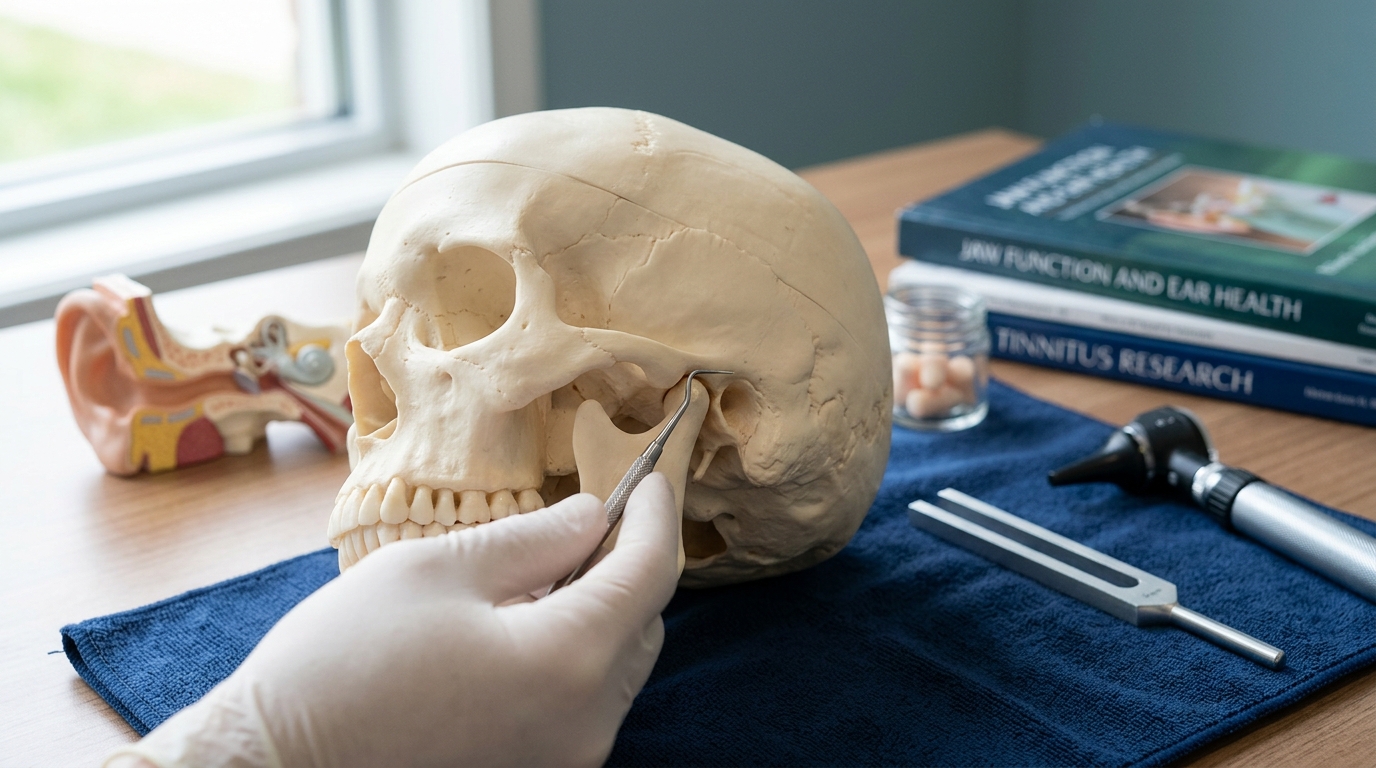
The TMJ-Tinnitus Connection
The temporomandibular joint (jaw joint) and inner ear structures are closely anatomically related. TMJ dysfunction can create referred sensations in the ear including tinnitus, fullness, or pain.
How TMJ Affects Tinnitus
Muscle Tension: Tight jaw and neck muscles increase pressure on inner ear structures.
Referred Pain: Nerve signals from jaw problems are interpreted as ear problems by the brain.
Joint Compression: Direct compression of ear structures from misaligned jaw affects auditory function.
Muscle-Related: The tensor tympani muscle (involved in ear function) is connected to jaw mechanics.
Signs of TMJ Contribution
Tinnitus of possible TMJ origin often:
- Occurs or worsens during stress (when jaw clenching increases)
- Accompanies jaw pain or clicking
- Improves with jaw manipulation
- Relates to recent dental work
- Correlates with teeth grinding
Management Strategies
Jaw Awareness: Consciously relaxing jaw and preventing clenching reduces muscle tension.
Mouthguard: Wearing a night guard prevents stress-related grinding and teeth clenching.
Jaw Stretches: Gentle stretching of jaw and neck muscles reduces tension:
- Side-to-side stretches
- Forward and back movements
- Neck release exercises
Heat Therapy: Warm compresses applied to jaw reduce muscle tension.
Professional Treatment: Physical therapy, occlusal adjustment by a dentist, or TMJ-specific treatment may be necessary.
Integrated Approach
Addressing TMJ dysfunction often produces significant tinnitus improvement, particularly in cases where jaw involvement is suspected.
If tinnitus correlates with jaw symptoms, addressing jaw function may provide substantial relief.